
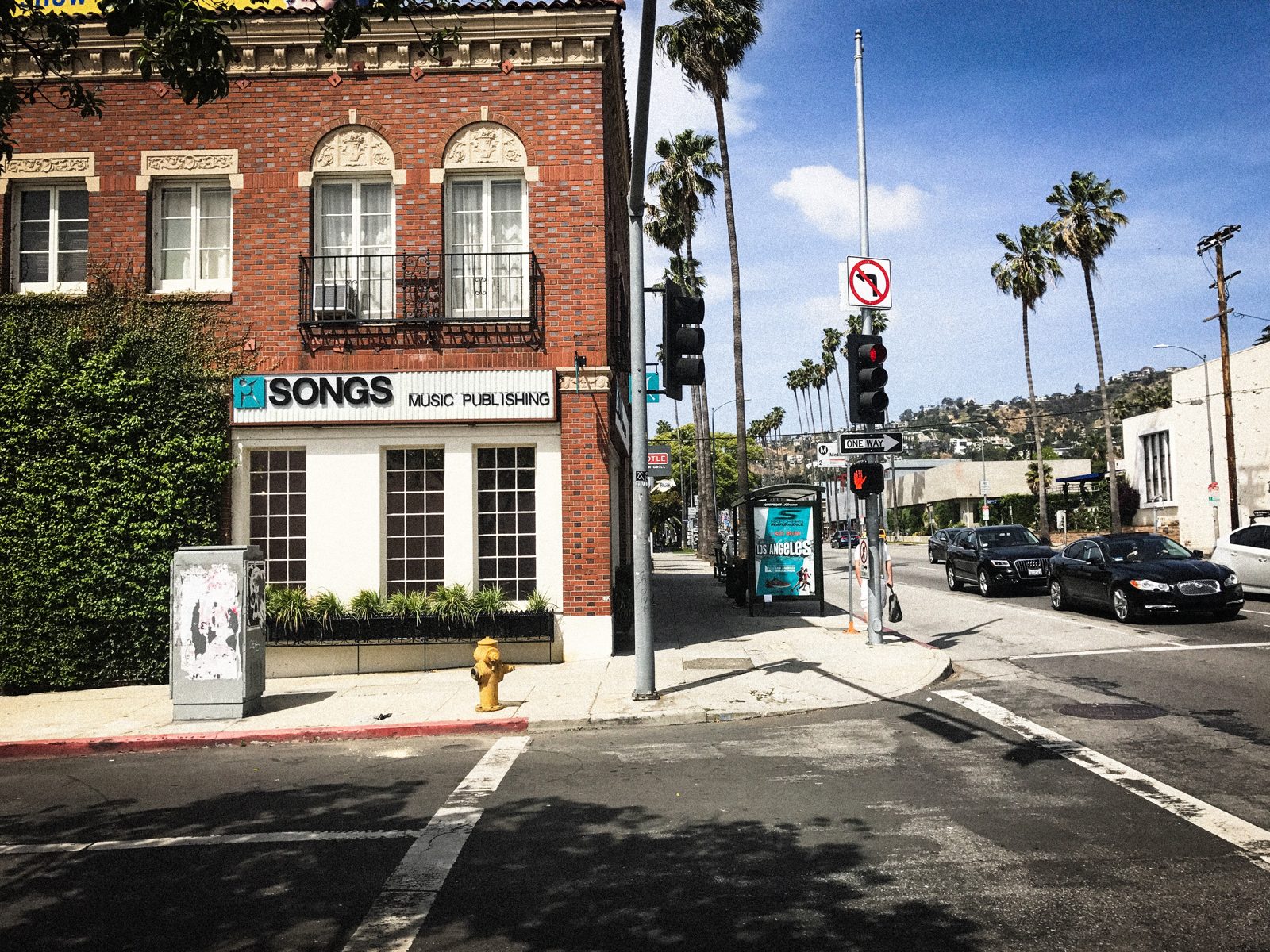
Émile Marcel Agustín is an A&R operator of sorts, getting his start in 2017 working A&R for Ben Maddahi out of the Island/SONGS Publishing office in West Hollywood—with his own management company already billing clients, no less.
As the founder of NINETYONEMGMT, Agustín steered the early career of Riz La Vie, whose catalog has since passed 169 million streams on Spotify.
Meanwhile, he brokered Riz’s deal with AWAL, drew Prescription Songs to the table, and later executive-produced Cristina’s 8 Ball from its first session to its final master.
To our great regret, Agustín sat down with IDOLS to discuss his hits and misses, the artists he built for, and life after NINETYONEMGMT.
Let’s start in 2017. In the same month NINETYONEMGMT became effective, you left the bank for an apprenticeship in Los Angeles. You already had a roster and were charging for services. What did you think that industry seat would give you that the company couldn’t?
Legibility and legitimacy—a back door I could trojan-horse into the rooms where it counts. Odysseus wasn’t coy about his pursuit; why would I be?
When “Napkins” became a hit, did you believe the industry would finally recognize you as an A&R?
I didn’t want the recognition. I wanted success for the artist I managed—that was the ethos of NINETYONEMGMT. The play ran on two tracks. Online, Spotify’s editorial playlists work like a ladder: a record on Fresh Finds gets heard by the editors above it, and every playlist is an audition for the next. On the ground, I was in L.A. doing A&R work out of the SONGS office, putting Riz in front of the people who read those numbers. The streams made him credible in the room; the room made the streams mean something. That was the thesis, and I delivered.
When did the horse first open?
I flew Riz to L.A. during the Keep. release cycle. I engineered the Fresh Finds placement; Human Re Sources reached out to Riz directly because of it, and our presence in L.A. turned that into a path to New Music Friday.
Did that chain make NINETYONEMGMT legible in its own right, or did it only make Riz legible through institutions whose names people already trusted?
No. The horse carried Riz; the company rode inside, unseen. But once it was in, it could trade. When I sat across from artists and executives, the placements were the credential. Nobody needed the company’s name to know the work.
But you brokered the AWAL deal. Why wasn’t that NINETYONEMGMT’s distribution deal?
It was Riz’s deal. I brokered it and took nothing on paper. A second deal, for the company, meant a seat in New York and capital to negotiate from. I had gone under. You don’t open a second negotiation when you can’t cover the first.
Riz ascended after that…
I built the stairway he climbed into heaven with.
Eight weeks after the deal, you were out. What happened?
I lost interest.
What held it instead?
One final act: 8 Ball.
Cristina was tracking with you in January 2017, before Riz ever released Keep. Why was she your last act and not your first?
She was away at college. I’d moved to L.A.
Spring 2020, you started working with her again. Where had you left off?
We’d tracked some demos at my home studio. I kept coming back to one of them, “Differences,” and I wanted to finish it. We never did, but it led to new demos.
How did those new demos become an album?
With a bit of serendipity. The whole troupe had been meandering after COVID. But one demo—named after a girl the guys saw at a grocery store upstate—became the anchor for the lead single, “2Breathe.”
I never priced it in. I got into this to champion artists, writers and producers. I’d built what I’d imagined, but I never thought about what I’d do with myself afterwards.
8 Ball came out on Pink Pick, Cristina’s own label, in October 2021. Why not on a NINETYONEMGMT label?
Same pattern as the artist before: we built the structure around them, but not the house.
Why is that?
I never priced it in. I got into this to champion artists, writers and producers. I’d built what I’d imagined, but I never thought about what I’d do with myself afterwards.
In 2021 you had an investor and a plan for a label. What happened to it?
We kept the equity in the project instead of selling it to a label—all of it under Pink Pick, her company. The album pushed, and the rights stayed with her. Then Prescription Songs was back at the table, the same publisher that bid on Riz, and we lined up writing sessions for her in L.A. The trip never happened.
Go back to 2020. You went from consulting for Motown straight into 8 Ball. Who shaped you on the way in?
No names. I’d been paying a premium for titles, offices, reputations. Up close the people were ordinary and flawed—no less, no more. One night I closed the account. I wrote it down: Kill all your idols.
Kill all your idols?
Yes. Exactly.
Right. Well. After “Napkins,” AWAL, Motown and 8 Ball—do you consider yourself successful?
Yeah. I’m working in a new industry, taking the skills I’ve learned there and building something new—something holistic. But let me ask you the question right back: do you consider yourself, Artie DiNapoli, successful?
Let’s stick to the script. What does success mean to you?
Success is the number you print when the deal closes. I’ve been in the rooms where it counts; at the top there’s nothing but the set. What I didn’t finish built more than what I did. And there is no script. You’re reading from mine.
Then who am I talking to?
Nobody.